 Call us now:


Many people end up disappointed with their folding tables—either they wobble at the slightest push or are too heavy to move. To avoid these issues, focus on stability and portability. A well-balanced table should be both sturdy and easy to transport and store.
? Assessing Stability
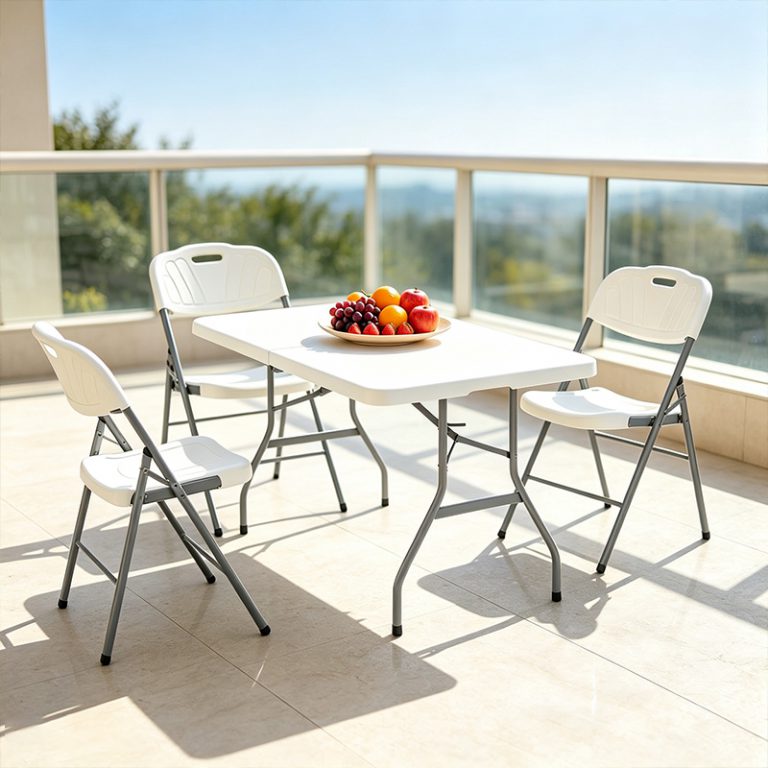
1. Frame Structure: An X-shaped cross-braced steel frame is essential for stability. This model features a carbon steel X-frame structure that evenly distributes weight, preventing wobbling even when loaded. The tube wall thickness must be sufficient—reference weights: a 1.2m table weighs around 7.7kg, while a 1.8m table weighs about 10.5kg. Adequate weight ensures solid support and prevents tipping over.
2. Anti-Slip Details: Rubber non-slip pads on the legs provide a secure grip on grass, tiles, or concrete, preventing sliding and floor scratches. Ensure folding locks are fully engaged before use to prevent accidental collapse.
3. Scene Compatibility: For commercial events or outdoor stalls, choose heavier models like 150cm or 180cm. For home balcony use, smaller to medium sizes suffice.
? Key Points for Portability
4. Folded Storage Volume: High-quality folding tables collapse into a slim, flat shape. For example, a 120cm model occupies only 0.033 CBM when packed—compact enough to fit in a trunk or closet, and easy to carry alone.
5. Weight Balance: Lighter isn’t always better. Excessively light tables often mean poor materials. For home use, a weight range of 7–11kg strikes the perfect balance between sturdiness and ease of handling.
6. Logistics-Friendly Packaging: Bulk orders come in individual cardboard boxes, simplifying shipping via sea or land freight. Ideal for overseas trade, retail stores, or inventory stockpiling.
Tip: Stability and portability involve trade-offs. Larger tables are more stable but slightly heavier—choose your size based on actual needs.