 Call us now:


When selecting an outdoor folding table, you don’t need to get overwhelmed by a variety of technical specifications. Simply focus on two key factors—material and structural design—to find a durable and practical option.
✅ Choosing the Right Material
For tabletops, prioritize HDPE (high-density polyethylene) plastic—the material used in this folding table. HDPE is highly resistant to UV exposure and rain, making it less prone to cracking or fading outdoors. Its smooth surface is easy to wipe clean, effortlessly removing grease stains from meals or camping use. For the frame, opt for carbon steel supports. Compared to ordinary thin iron tubing, carbon steel offers greater strength, resists bending and rusting, and ensures longer durability under harsh outdoor conditions. Avoid low-quality thin metal frames that warp after just a few uses.
❌ Common Pitfalls to Avoid
Never choose tables with recycled or substandard plastic tabletops—they tend to crack easily. Thin iron frames are prone to rust and compromise safety during outdoor use.
✅ Key Design Features to Consider
1. Folding Mechanism: A half-fold design results in a flat profile when folded, saving storage space and fitting easily into car trunks or cabinets. Some models offer multi-level height adjustment (e.g., model DK-T-Z01 can switch between 50/74/90 cm), ideal for picnics, office work, or children’s use.
2. Size Selection Based on Use:
• Small spaces / 2–3 people: 120×60 cm—perfect for home balconies or short trips.
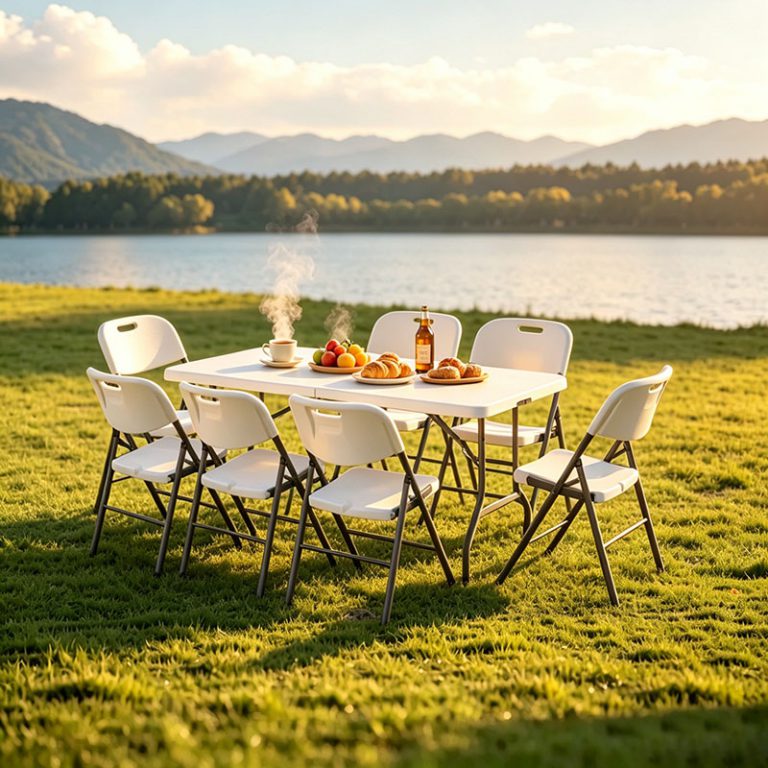
• Group gatherings: 150×70 cm or 180×70 cm—ideal for backyard parties or commercial events.
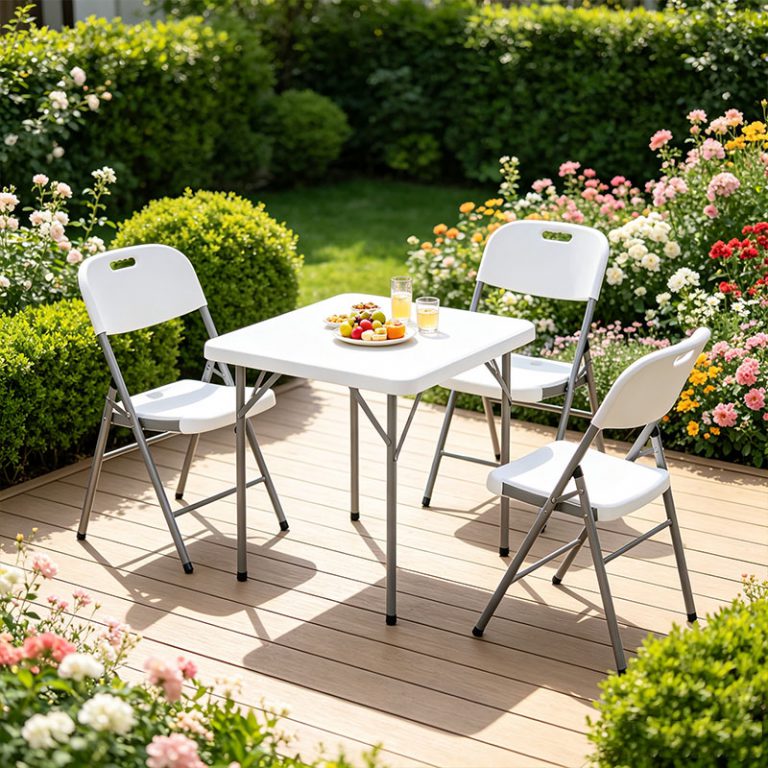
• Square table: 88×88 cm—great for compact balconies or casual coffee settings.
3. Detail-Oriented Design: Non-slip rubber feet prevent slipping and protect floors; sturdy seams and reinforced folding hinges ensure smooth operation without jamming.
? Bonus Feature: OEM/ODM customization available. For commercial purchases, you can customize dimensions and appearance to match your brand requirements.